Archive for the ‘Uncategorized’ Category

2016 Joseph Bell website Review

December 31, 2016

During 2016 the website had over 2000 visitors, being a small increase over the the previous year and sustaining the continuous interest in the Titanic Chief Engineer, Joseph Bell,  the visitors viewed just over 4700 items and were from 80 countries.  The following are the top ten countries who used the website during the year:

U.S.A.

UK.

Canada.

Germany.

Australia.

Norway.

Brazil.

Spain.

France.

Russia.

Thanks to all visitors for their continue interest during 2016 and wish all

a Happy New Year.

Did Coal Fire Sink Titanic?

December 31, 2016

“A new theory that a fire in a coal bunker on the liner RMS Titanic contributed to its sinking has been put forward, as the fate of the liner remains a subject of much debate.

Ray Boston, who has devoted 20 years to researching the subject, said the reason Titanic was travelling so quickly through dangerous waters was because of an “uncontrollable” coal fire on board which began during speed trials in Belfast 10 days before it left Southampton.

The fire was still burning when the liner set off, creating a floating time bomb which had the potential to cause “serious explosions” below decks before it reached New York.

Mr Boston cites the testimony of Bruce Ismay, the managing director of the White Star Line, which owned Titanic, to an inquiry into the catastrophe in which he told investigators he was forced by John Pierpont Morgan, the ultimate owner of the ship, to instruct the crew to cross the Atlantic at full speed.

“Morgan thought it was necessary, in order to justify his gamble, that they should reach New York and unload all the passengers before the inevitable explosions occurred,” he said.

Fireman J Dilley, a stoker aboard Titanic who survived to give evidence to the inquiry, added weight to the suggestion of an uncontrollable fire in coal bunker six of the ship.

“We didn’t get that fire out and among the stokers there was talk that we’d have to empty the big coal bunkers after we’d put the passengers off in New York and then call on the fireboats there to help us put out the fire,” he said.

“But we didn’t need such help. It was right under bunker number six that the iceberg tore the biggest hole in the Titanic.”

At 11.40pm on April 14, 1912 Titanic struck an iceberg while travelling at high speed through the icy waters of the Atlantic, and by 2.20am she had sunk beneath the waves with the loss of nearly 1,500 passengers and crew. Just 711 people were saved.

An inquiry into the disaster, presented to Parliament in the summer of 1912, described the ship as travelling at “high speed” through the dangerous ice-filled waters, giving the crew little opportunity to avoid a fatal collision with an iceberg.

The inquiry found that Titanic’s speed, of about 22 knots, was “excessive” considering where it was, off the coast of Newfoundland, and that additional look-outs should have been posted on all sides of the liner rather than just in the crow’s nest.

When the look-out spotted the approaching iceberg, he sounded the warning and the vessel was immediately turned hard to starboard and the engines put into full reverse, but it was already too late to avoid disaster.

Mr Boston said it was clear that Morgan was aware of the fire before the ship set sail but that the news was hushed up so as not to alarm passengers.

It was, perhaps, for this reason that Morgan quietly cancelled his ticket on the maiden voyage the day before the ship set sail, said Mr Boston.

“The crew, who had been sworn to silence, knew very well he was not [on board] because they had watched him, late on the night before his ship was due to sail… carrying his own luggage down to his Rolls-Royce on the quayside,” he said.

“Why? Because he knew there was an uncontrollable fire down in coal bunker number six.”

But not all experts on the disaster agree with Mr Boston’s assessment. Geoff Pattison, a member of the American and British Titanic Societies and lecturer at Northumbria University, is sceptical.

“The Diana inquiry took 10 years and millions of pounds to decide that it was an accident, and this is how I view the Titanic,” he said.

“I think this is a case of conspiracy after the fact, like the Kennedy assassination. It was just a simple twist of fate.”


S S Ionic March 1894

November 8, 2016

This account from the Auckland Star, illustrates the passage and procedure of a voyage from the London Victoria Docks to New Zealand in 1894.

Joseph Bell was appointed Chief Engineer to S S Ionic in 1894, and over the subsequent period of five years, 1894-1899, he sailed on S S Ionic for fourteen voyages to New Zealand that took an average 122 days to complete.

THE IONIC.

“The Shaw, Saville, and Albion Company’s steamer lonic, from London, arrived here at 6.55 a.m. today. She left the Royal Albert Docks, London, on Thursday, March 22nd, at 0.47 p.m., and calling at Plymouth on the 24th and taking passengers and mails on board the lonic proceeded on her way, meeting with fresh S.E. breezes across the Bay of Biscay, from thence strong S.W. to westerly winds until arrival at Tenerife on March 29th. After coaling here she proceeded at 10.32 a.m. the same day for Capetown, experiencing moderate variable breezes to the line, which was crossed on Wednesday, April 4th, at 5 p.m., thence until arrival in Table Bay on Thursday, April 12th, at 10 p.m., moderate to fresh S.E. Trades. The voyage was resumed on April 13th after having embarked a few passengers. Light to moderate variable winds were encountered to long. 50deg E., thence strong breezes to an occasional moderate gale, wind varying from N.N.W. to S. W., to long. lOOdeg E. ; from thence to port, rainy, dull and overcast weather was experienced, high following sea and squalls of wind, being principally from W. to N.W. The Mewstar was passed at 6.38 a.m., and lonic arrived at Hobart Wharf at 1.20 p.m. After landing about 140 tons of general merchandise, and passengers, the lonic left at 6.25 a.m. on 2nd May for Auckland, experiencing on the voyage across S.W. to westerly winds and weather squally and rainy until the coast of New Zealand was sighted. The run down the coast was particularly fine, wind S.S.W. and sea smooth, arriving as above. Capt, Kidley, R.N.R., who is in command, is assisted by the following officers:—Chief officer, W, L. Dangerfield Chapman (Lieut. R.N.R.): second, R. W. James; third, E. Crosby Roberts: Joseph Bell, R.N.R., chief engineer; G. R. McMahon, second engineer; W. Reid, third engineer; Walter S. Inm, purser. Since her last voyage to New Zealand the lonic has undergone extensive alterations at the hands of her builder, Messrs Harland and Wolff. She has been fitted with new quadruple expansion engines of the largest type. Her passenger accommodation has, been entirely re-arranged on the lines of the new twin-screw steamship Gothic belonging to the White Star line, and she has been provided with new refrigerating apparatus—Hall’s system—capable of dealing with 36,000 carcasses and 217 tons dairy produce. The lonic leaves for Wellington probably tomorrow evening.”


£85,000 for Titanic Locker Key

October 24, 2016

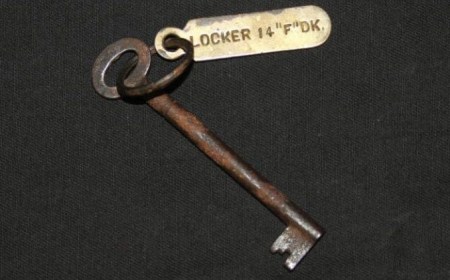
The key, that was attached to a brass tag stamped “Locker 14 F Deck’ was sold for £85,000 pounds sterling, which was anticipated to fetch £50,000 at auction, together with other items from Titanic yesterday

The key was used by Sidney Sedunary aged 23, from Shirley, Southampton – a third class steward who died on April 15th 1912 as a consequence of the sinking of RMS Titanic.

The key was sent to Mr Sedunary’s pregnant wife Madge after his body was recovered and remained in the family until the sale.

One of the other lots sold, included a postcard written on board the Titanic by the chief wireless operator Jack Phillips that sold for £19,000.

 titanic-locker-key

Family Farm Cumberland 1896

September 13, 2016

PARK HOUSE 1913: Frank Fisher.  This record of past times written by Frank Fisher on the 3rd December 1913 about Park House Farm, Wreay, must also be very typical of the family farm that was home for Joseph Bell in Farlam prior to leaving home aged 15, to begin his apprenticeship in 1876 with R & H Stephenson & Co, Shipyard in Newcastle-upon-Tyne.

Frank’s essay which was carefully written in clear cursive writing with few corrections and only a few spelling mistakes gives fascinating insight into farming life in Cumberland just prior to the 1st World War.

“It is not a very large one, being about one hundred acres. Most of the land is used for grazing. About thirty acres of it is hilly ground. We have about three hundred sheep and about seventy cattle. Having not much ploughing, the most we do is about forty acres. We have four horses to do the ploughing and a trap horse. We use the hilly ground for grazing the sheep and cattle.

 We have a self-binder, a machine which is a great important reaper, it binds the corn as it cuts and so saves all the trouble of binding the sheaves, we also have a mowing machine.

 My father gets two servant men and one servant girl. We have two sheep dogs. The land is well watered by the river Peteril. We have about one acre of potato land. We have two meadows. We grow about twenty acres of turnips. The corn we grow is cut by the self-binder. We have a corn-crusher to crush the corn for the horses.

 The cows have the hilly land to graze in. The milk we get from the cows is separted and the separated milk is given to the calves. We have twelve cows. The cows stop in on winter nights and go out through the day. In summer the cows are out day and night.

 There is a dutch barn joying to the buildings. In the dutch barn the corn in kept. We grow about twenty cares of corn. Most of the corn we grow is put in the dutch barn. What we can’t get into the dutch barn is put into stacks. All the hay is put in the dutch barn. We sometimes make two stacks if we have to feed the sheep away in the fields. We get the steam thresher to thresh the corn. After the corn is threshed we take it to the mill to get it made into otemeal.

 There is a quary in our land and we have to rail it off to keep the sheep and cattle from falling in. Before we did this one of our best bullocks fell in and got its neck broken. We sent for the butcher right away and he butched it. Last summer we lost three of our sheep in the flood. They were found at Carlisle in the Eden. We buy black cattle in the winter and fatten them and sell them in the spring. We generally have about one hundred lambs. We get an extra man to look after the lambs in lambing time, because the other men have no time.

 I hope that I have been able to give you some idea of the usual size of a Cumberland farm which has about one to two hundred acres of ploughing, grazing and meadow land”

This Frank Fisher essay appeared in’Pine Cone’ the Newsletter of The Friends of St Mary’s Church, Wreay, Cumbria in May 2016.  The researcher Adrian Allan discovered the Frank Fisher essay at the Carlisle Archive Centre.


Titanic Belfast Museum Best in Europe

September 6, 2016

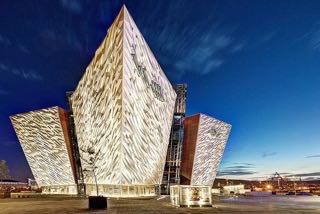
The Titanic Belfast Museum has been crowned the best tourist attraction in Europe.

The museum opened in 2012, beating competition from the Eiffel Tower in Paris, the Colosseum in Rome, Acropolis in Athens and Sagrada Familia in Barcelona to lift the title at the World Travel Awards in Italy.  This prestigious award is a tribute to the crew and passengers who lost their lives in April 1912.

titanic-museum-belfast

Titanic Sinking-Engine Room Heroes

August 30, 2016

UNSUNG HEROES OF THE ENGINE ROOM

Chief Bell’s Men Kept Titanic’s Lights Burning Until She Went Down.

KNEW HER WOUND WAS FATAL

Yet All Stuck to Their Posts and Perished to the Last Man—Builders’ Engineers with Them.

“The lights were burning all over the ship until shortly before she went down.”This is the testimony of the survivors of the Titanic. It was her engineers who kept the lights burning, and in the list of heroes who went down with the vessel the names of the men of the engineering force will have a high place. Not one of them was saved, although many of them were off duty, and these had some chance of climbing to the deck. While it will never be known just what happened, it is believed that every one went back to his post instead of to the decks.

Engineers stand small chance for life in a sea disaster, and they know it. It is a tradition that when the engineers on a sinking vessel have done their duty to the last they gather in the engine room, clasping hands while standing about the engines, and so go down with their vessel.

The Titanic’s engineers have been overlooked in the bestowal of praise. Besides the engineers of the regular ship’s force there were on board twenty guarantee engineers, representing the builders and holders of engineering contracts, and so called because they make the first few trips on a new vessel to see that the machinery comes up to the guarantee. All these were the first to know the desperate nature of the damage to the Titanic.

They must have worked at high tension, for they were the first to note that rising of the water, the uselessness of the pumps, and the impossibility of keeping afloat. They had little time for thought, however, for they had to keep the dynamos going, the pumps working, look after the bulkhead doors, and keep the stoke hole force at work. Most of them probably died at that last explosion which tore the Titanic asunder as she went down.

The men were assigned each to his own task. There are hydraulic, electrical, pumps, and steam packing men, and besides the regulars the guarantee men were there to lend a hand. It was not a duty call that kept the guarantee men below, for they were in no sense part of the crew. The duty of the guarantee engineers is to watch the working of the great engines, see that they are tuned up and in working order. They also watch the workings of each part of the machinery, which has nothing to do with the electrical light dynamos and the refrigerating plant.

The conduct of one man stands out conspicuously, according to the stories told by members of the crew. Archie Frost, builder’s chief engineer, representing Harland & Wolff, was not in the engine room when the crash came, but he climbed down the steep iron ladders to the engines and death. When last seen he was there. With him was Thomas Andrews, designer of the Titanic. When the collision came there was no call of duty to keep him from the deck and the only chance of escape, but he would not take that chance. The last time Andrews was seen by any one alive was in the engine room with Frost and Bell, the Titanic’s Chief, and all were working too hard, perhaps, to think much of the slowly gaining waters.

Every man in the White Star Line is to-day mourning the loss of bluff, genial Joseph Bell, Chief Engineer of the Titanic and Senior Engineer of the line. Bell was about 50 years old, and he had spent thirty-six years in the service of the company. He was married, and lived in Liverpool. Some of his children are now attending school in Glasgow. It is said of him that he was the best marine engineer in Great Britain, and knew more about steam vessels than any other man in his profession. Under him were two second engineers, three third, and twelve junior engineers.

Second Senior Engineer Farquarson had been with the company fourteen years, and Second Engineer Harrison had served sixteen years. Although a young man. Intermediate Second Engineer Harry Hesketh had seen nineteen years of service. He began the practice of his profession with the White Star Line, and had never served in any other. The junior engineers, “the kids” they called them on shipboard, each one a mere lad, proved themselves men indeed, for they stuck to their work and went down with the ship.

Engineers Rarely Saved.”The engineers were not deceived by false hope. They were in a position to know how badly the vessel was injured. Then they worked in an uncertainty which must have been maddening. On deck the crew and passengers could see what was going on. Down in the engine room they could not tell how the work of lowering the boats was progressing. They had no chance and they must have known it.

They did not hear the Captain’s last word as the vessel began to sink that duty done, every man must take care of himself. Even if they had they would never have been able to climb up steep iron ladders before they could reach the deck. It was ninety feet from the water line to the boat deck, and they were thirty-two feet below that.

“They died like men,” said Mr. Hunter, (Secretary of the American Seamen’s Friend Society) “and their bravery seems to have been overlooked. It can be said of them that, like the higher officers, they stuck to their posts until death.”

Report from The New York Times, New York, NY 23 Apr 1912.


/
School Friends: Bell & Ismay

May 31, 2016

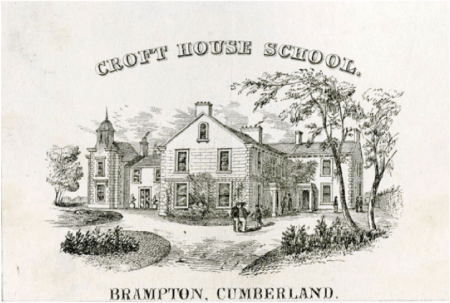
George Joseph Bell was born at Esk St. Andrews, north of Longtown very close to the English / Scottish border, on 9th August 1835. The family moved to The Nook near Irthington, which stands by the river Irthing, near the Roman wall, and being 3 miles from Brampton when he was young. When he was twelve years old he started at Croft House School in Brampton.

Joseph Coulthard established Croft House School in about 1840. It quickly became a well-respected boarding school offering a progressive curriculum to the sons of gentlemen. The school curriculum was English, Classics, Modern Language, Deportment, Mathematics, Philosophy included Astronomy, Geology, Botany, Chemistry & Physiology Deportment included Dancing, Drill, and Gentlemanly Bearing. Pupils came from across the north of England, Scotland and even Ireland. Mr Coulthard ran the school until 1872 when he died. One of the existing masters took over and it continued for at least another ten years. The school taught about a hundred boys.

brampton

George Joseph Bell completed his education at the school when aged 16, and under the guidance of his uncle Robert Bell learnt surveying and land management. He became the district surveyor to Brampton Highways Board, sometime during 1867 to 1870. After gaining experience in Lincolnshire George Joseph returned to Cumberland as county surveyor and bridge builder, where he died age 75.

While he was living at his uncles farm, the Nook in Irthington he met and married Jane Moses of Lanercost. Jane had a twin sister called Margaret. She married Joseph Bell of Farlam and they were uncle and aunt to Joseph Bell, Chief Engineer on the Titanic.

George and Jane’s children, Robert, Hannah and Annie, were close friends of Joseph and his siblings. Living in Brampton they were easy to visit. Robert was apprenticed to Robert Stephenson’s engine works in Newcastle. He was working in the factory when Joseph started his apprenticeship, and married a local girl. Much later while Joseph was visiting them in Harrogate, Robert witnessed Joseph’s will.

Shortly after George had started at Croft House school another new boy started. He was a couple of months younger and came over from Maryport. Thomas Ismay was born on the 3 February 1836 and spent four years at Brampton. He was a studious child and slightly different to the other boys. During his childhood next to the sea in Maryport he learnt the habit of chewing tobacco from the sailors and was given the nickname of ‘Baccy’ Ismay. While at school the love of ships grew as he enjoyed building accurate model ships and sailing them on the pond in Irthington.

The two men discussed above were both influential in Joseph Bell’s life. Was this pure coincidence?

A third person who visited Brampton and the Thompson mines at Kirkhouse was Robert Stevenson. Although he had died before Joseph was born, Stevenson may have known his father. John Bell was a local Yeoman farmer and was part of the committee involved in raising money to build a new church with the support of the Thompsons. Stephenson made a donation to the fund. The closeness of the family farm to all the new steam powered technology and Victorian innovation may well have influenced a young Joseph Bell in choosing engineering over farming.

This fascinating research was done by Ann Freer for the site.


‘Harmony of the Seas’

May 21, 2016

Image 18-05-2016 at 14.17

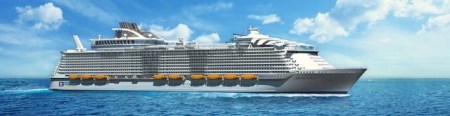
The worlds largest cruise ship, ‘Harmony of the Seas’  arrived in Southampton this week prior to it’s maiden voyage. This colossal 227,000 – tonne vessel cost £783m to build.  It is the length of  four football pitches 361 metres [Titanic was 269metres] and  65 metres wide. A crew of 2,100 and a speed 22knots.  Some special features include a 10 – storey water slide, Gardens with 20ft trees, Ice rink, robotic bar tenders and 16 decks for the 6,780 passengers.  I wonder how many lifeboats are on board?

The scale and size of the vessel is reminiscent of the maiden voyage of R.M.S. Titanic in 1912, when it too was the wonder of the age.


R.M.S. Titanic: 1912-2016. R.I.P

April 15, 2016
Joseph Bell Memorial St Faith's Church Crosby Merseyside

Joseph Bell Memorial in St Faith’s Church, Crosby, Merseyside. Funded by his wife Maud Bell, and unveiled on 6th January 1913