Archive for April, 2018

Prime Titanic menu makes £100k at auction

April 23, 2018

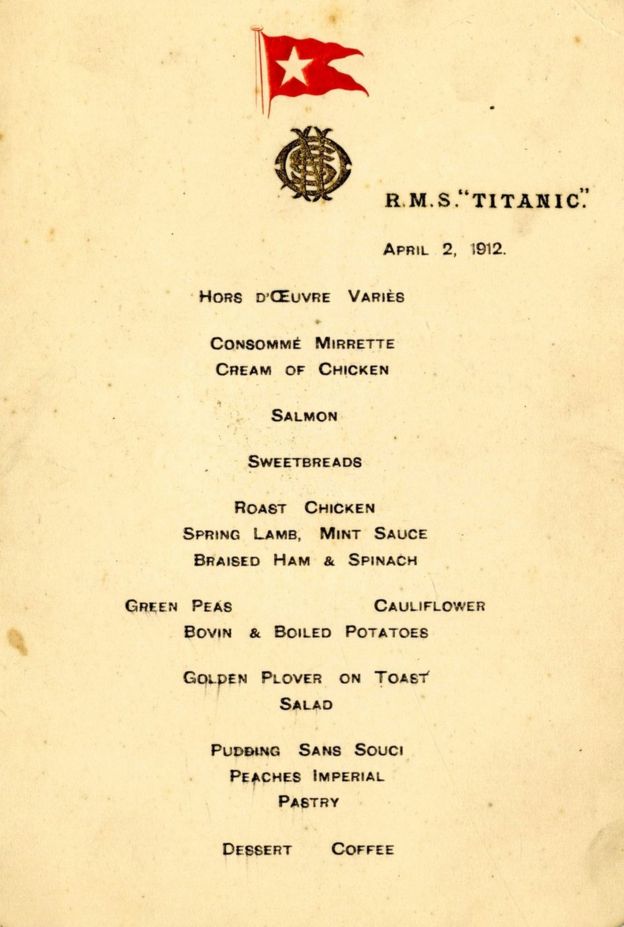
A menu of the first meal ever served aboard the Titanic has fetched £100,000 at auction. The lunch, including consommé mirrette, sweetbreads and spring lamb, was served to officers on the first day of sea trials on 2 April 1912.

It belonged to Second Officer Charles Lightoller, the most senior crew member to survive, who gave it to his wife as he left Southampton on 10 April 1912. It was sold to a British collector at the auction at Henry Aldridge and Son in Devizes, Wiltshire on Saturday.

Andrew Aldridge, from the firm, said: “We are delighted with the results of the auction and think the rarity of the objects is reflected in the prices which illustrates the ongoing fascination with the story of the Titanic.”

He said items had been snapped up by collectors in “all four corners of the globe”.

On 2 April, on Titanic’s first day of sea trials, officers and crew enjoyed their first meal served in the main dining saloon before being joined by the passengers.

Menu
The menu was given to Charles Lightoller’s wife as a souvenir as he departed from Southampton on 10 April 1912

Mr Aldridge said it was believed only one other example of a 2 April menu had survived, which belonged to Titanic’s Fifth Officer Harold Lowe. “He wrote a notation on the bottom ‘this is first meal ever served on board’ however the bottom of the Lowe menu was removed,” he said.

“So this [the Charles Lightoller menu] is believed to be the only complete example and is one of the most important examples of its type in existence today.”

The Lowe menu sold at auction for £28,000 in 2004.

Related Topics


Ironic performance of Titanic Musical

April 13, 2018

100_4025

Titanic the musical was being performed in Southampton for the first  time.  The opening night performance of the musical had to be abandoned after debris fell onto the stage during the opening night night performance.

Audience members at the Mayflower Theatre said items began falling shortly after the scene in which the ship hits the iceberg. An announcer said the show was being halted for “health and safety reasons”.

The Southampton run coincides with the 106th anniversary of Titanic’s maiden voyage from the city in April 1912.  Associate producer Michael Ockwell said: “You couldn’t make it up… the irony isn’t lost on us.”

A theatre spokesman said plaster from a backstage wall had fallen on to the stage but it was “not a major structural issue”. “With the safety of the cast in mind, we made the sensible decision to cancel the second act of the show,” he added.Theatre-goers were told the show was being abandoned

Claire Cleaver, who was attending Thursday’s show with her niece, said she initially thought it was an on-stage effect. “It was quite frightening at first as we didn’t know what was going on but the Mayflower handled it very well and there was no panic,” she added.

“It’s very ironic being the first showing of the Titanic musical and then the show itself sinking. It was a fantastic show, it was so disappointing.”The theatre said no-one was injured and Friday evening’s performance was expected to go ahead as planned following repair work.

During the ten-day run – its first in Southampton – a special midnight performance coinciding with the time the ship sank in April 1912 is due to take place on Saturday. Titanic the Musical opened on Broadway in 1997 and has won Tony Awards including best musical and best score.

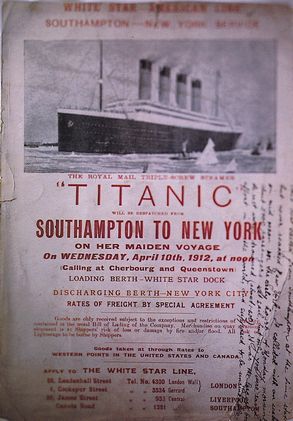
Titanic ticket

Titanic Maiden Voyage Ticket Southampton – New York

Titanic launch ticket for sale

April 13, 2018

Auctioneers expect rare Titanic launch ticket to sell for £25k  An unused ticket for the launch of the Titanic – described as an “exceptional piece of Belfast history” – is expected to fetch up to £25,000 at auction.

https://www.belfasttelegraph.co.uk/news/northern-ireland/auctioneers-expect-rare-titanic-launch-ticket-to-sell-for-25k-36801534.html


Remembering Joseph Bell

April 12, 2018

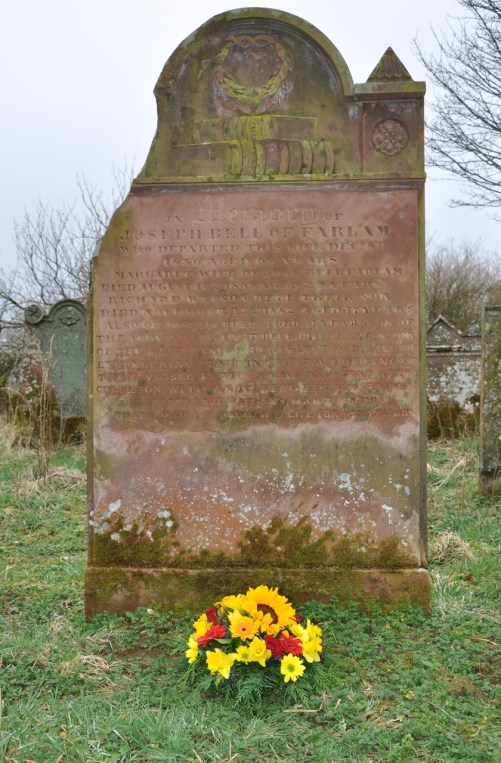
It is 106 years ago on the 15th April 2018, that Joseph Bell & his engineers died heroically fighting to postpone the sinking of R M S Titanic.  In memory of  all those who died trying to do so, a wreath of flowers has been laid at the Joseph Bell memorial headstone in Farlam.

Joseph Bell Chief Engineer of the Titanic, died at his post in the engine room with his fellow engineers.  As the Titanic began to flood, engineers worked tirelessly on the electrical  systems to keep the lights and pumps operational, as well as provide power to the ship’s radio that was sending out the ‘Mayday’ distress signal.  Without their sacrifice, many more lives would have been lost.

The wreck of R.M.S. Titanic rests on the Atlantic Ocean floor at a depth of 3800m or [12,467 ft] off the coast of Newfoundland.  Titanic had completed 1,451 miles of the 1,901 miles of her total intended journey before she sank.

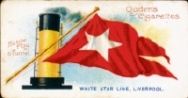
WHITE STAR HOUSE FLAG

WHITE STAR HOUSE FLAG

DSC_0005

Below some of the Titanic engineers, it’s thought that Joseph Bell is the one

seated in the centre of the front row.

Titanic Engineers


COMMEMORATING THE TITANIC ENGINEERING DEPARTMENT APRIL 15TH 1912

April 1, 2018

As we approach this 106th Anniversary of the sinking of R.M.S. Titanic on April 15th 1912, it is worth recalling all who made up the engineering department in their various rolls on the night of the 15th April 1912, under the supervision of the Chief Engineer Joseph Bell. Their heroic human endeavour will never be forgotten.

 The engineering crew, who were responsible for keeping the engines, generators, and other mechanical equipment on the Titanic working efficiently, had the education and technical expertise to operate, maintain, and repair the engineering plant – they were consequentially the highest paid members of the crew.

Shortly after leaving Southampton, a fire was discovered in the coalbunker of No 6 Boiler Room and coal trimmers were detailed to trace the source of the fire and extinguish it.

On the night of 14 April, the Second Engineering Officer John Henry Hesketh the senior engineer on duty, and Leading Fireman Frederick Barrett were in No 6 Boiler inspecting the coal bunker and confirming the fire was out when the Titanic struck the iceberg at 11.40 pm. It ripped this part of the ship and the pair escaped through the connecting tunnel to No 5 Boiler Room, closing the bulkhead doors. Barrett later gave evidence at the Southampton Enquiry.

Most of the engineering crew remained below decks in the engine and boiler rooms: some fighting a losing battle to keep the ship afloat by operating the pumps in the forward compartments as well as keeping the steam up in the boiler rooms, to prevent boiler explosion on contact with the water; and others keeping the generators running to maintain power and lights throughout Titanic up until two minutes before the ship sank. It is considered that their actions delayed the sinking for over an hour and helped keep the ship afloat long enough for nearly all the lifeboats to be launched. Some of the men working downstairs were killed when seawater flooded this section as the ship hit the iceberg.

Titanic employed 25 engineers, as well as eight electricians and two boilermakers and all were lost as were 13 leading firemen (Stoker Foremen) and 163 firemen (Stokers). The ship had 29 boilers, each containing three furnaces for a total of 159 furnaces. Each fireman was assigned one boiler and three furnaces. Of the Titanic’s six boiler rooms, each leading fireman was assigned to two of them with 10 to 15 firemen under him. Next to each boiler was a coal chute that deposited coal from the overhead coalbunkers, and a fireman with a shovel would constantly feed coal into the three furnaces. Shifts for all the firemen and their foremen were four hours on and eight hours off. The heat in the boiler rooms usually exceeded 120 °F (49 °C), so a four-hour shift was very demanding. Most of the firemen worked wearing only their vests and shorts. Of the firemen, only three leading firemen and around 45 other firemen survived. Several of the firemen who survived got into the lifeboats dressed only in their vests and shorts in 28 °F (−2 °C) weather. 73 trimmers, or coal trimmers, were on the Titanic. Of the engineering crew, the trimmers were paid the least and had probably the worst job of the crew. The trimmers worked inside the coalbunkers located on top of and between the boilers. The trimmers used shovels and wheelbarrows to move coal around the bunker to keep the coal level, and to shovel the coal down the coal chute to the firemen below to shovel it into the furnaces. If too much coal built up on one side of a coalbunker, the ship would actually list to that side. All the residual heat from the boilers rose up into the coal bunkers, and inside, the bunkers were poorly lighted, full of coal dust, and extremely hot from the boilers. Around 20 of them survived.

The 33 greasers worked in the turbine and reciprocating engine rooms alongside the engineers and they were responsible for maintaining and supplying oil and lubricants for all the mechanical equipment. Only four of them survived. There were six mess hall stewards. These men worked in the crew’s kitchen to cook and serve food for the crew: four served the engineering crew; two served the deck crew. Just one steward from engineering survived.